
How to safely run wiring for a garage EV charger is one of the first questions homeowners ask after buying an electric vehicle. Charging at home is convenient, faster than many public stations, and far cheaper in the long run. But the wiring behind that charger carries a serious electrical load, and mistakes can lead to overheating, tripped breakers, or even fire hazards.
Professional electricians follow a precise process before running any wires. They evaluate your electrical panel, calculate load demand, select the correct wiring size, and confirm grounding and code compliance. Each of these checks protects both your vehicle and your home’s electrical system.
In this guide, you’ll learn exactly how professionals approach garage EV charger wiring, what safety factors they verify first, and what homeowners should understand before starting an installation project.
Understanding the Electrical Demands of an EV Charger
Electric vehicle chargers place a continuous demand on your electrical system that is very different from typical household appliances. While devices like microwaves or dryers cycle on and off, EV chargers often draw sustained current for several hours.
A Level 2 EV charger, which is the most common option for home garages, typically operates on a 240‑volt circuit and may draw between 30 and 50 amps. That level of demand requires dedicated wiring and protection through a properly sized breaker.
If the wiring is undersized or connected to an overloaded panel, the system may overheat. This is why learning how to safely run wiring for a garage EV charger begins with understanding the power requirements of the charging equipment itself.
Electricians evaluate this demand before touching a single wire.
What Electricians Inspect Before Running EV Charger Wiring
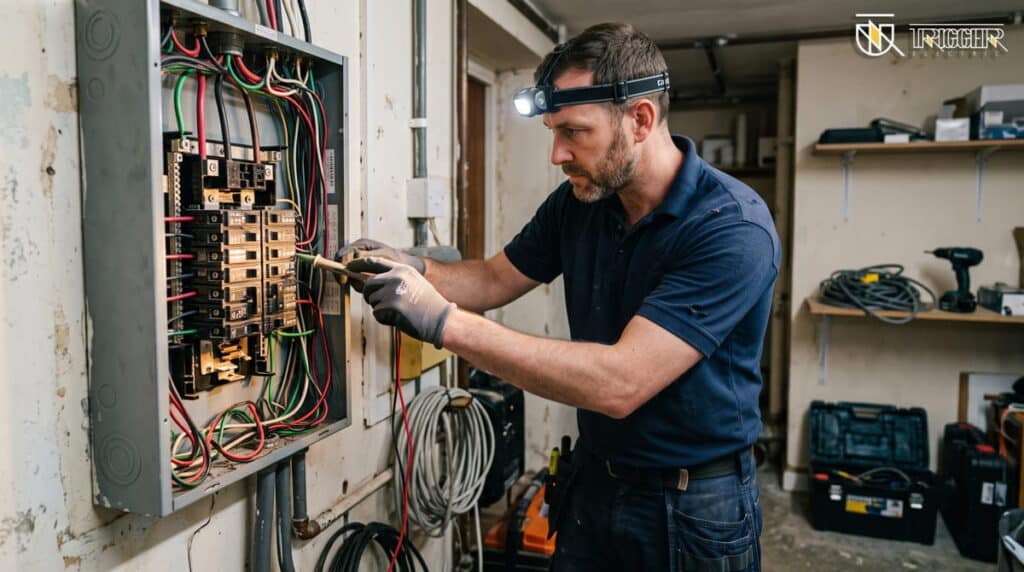
Before installation begins, professionals perform a systematic inspection. This evaluation helps them determine whether your current electrical infrastructure can support the charger safely.
Key inspection points include:
- Main electrical panel capacity
Electricians check whether the panel has enough available amperage to support an EV charger.
- Breaker space availability
Even if capacity exists, the panel must have space for a dedicated double‑pole breaker.
- Distance between panel and garage
Longer distances influence wire gauge and conduit requirements.
- Existing wiring conditions
Older homes may require upgraded wiring before installation.
- Local electrical code requirements
Municipal rules often determine breaker types, disconnect switches, and outlet placement.
These checks allow electricians to design a wiring route that supports the charger safely and efficiently.
Electrical Panel Capacity and Load Calculations
Once the site inspection is complete, the next professional step involves calculating the electrical load of the home. This determines whether your panel can safely support the charger without exceeding its rated capacity.
Electricians perform a formal load calculation by examining all major electrical appliances connected to the panel. Items such as air conditioners, ovens, electric dryers, and water heaters already consume significant amperage.
The EV charger’s demand is then added to the existing load. If the total approaches or exceeds the panel’s maximum capacity, one of two solutions is required:
- Upgrading the electrical panel to a higher capacity
- Installing a load management system that balances power usage
This calculation ensures the EV charger operates without causing frequent breaker trips or electrical instability.
Typical Wiring and Breaker Requirements for Home EV Chargers
The following table illustrates common wiring configurations used in residential EV charger installations. Exact specifications vary depending on the charger model and local electrical codes.
| Charger Type | Voltage | Typical Amperage | Recommended Wire Gauge | Breaker Size |
| Level 1 Charger | 120V | 12–16 amps | 12 gauge | 20 amp |
| Level 2 Charger (lower power) | 240V | 30 amps | 10 gauge | 40 amp |
| Level 2 Charger (standard) | 240V | 40 amps | 8 gauge | 50 amp |
| Level 2 Charger (high power) | 240V | 48 amps | 6 gauge | 60 amp |
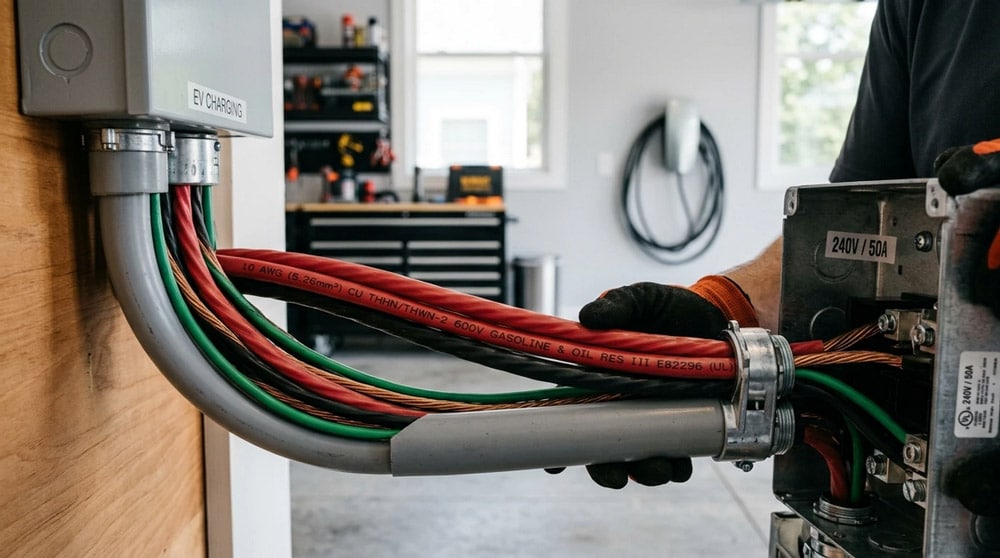
Selecting the correct wiring size is essential when determining how to safely run wiring for a garage EV charger. If the wire is too small for the current, it can overheat over time and create a fire risk.
Safe Wiring Routing Inside the Garage
Running the wiring itself requires careful planning. Electricians do not simply route cables through the shortest path. They consider safety, accessibility, and protection from physical damage.
A typical installation involves running cable from the electrical panel through walls, ceilings, or conduit until it reaches the charger location. When wiring is exposed in the garage, it is often enclosed in metal conduit to prevent accidental damage from tools, vehicles, or storage equipment.
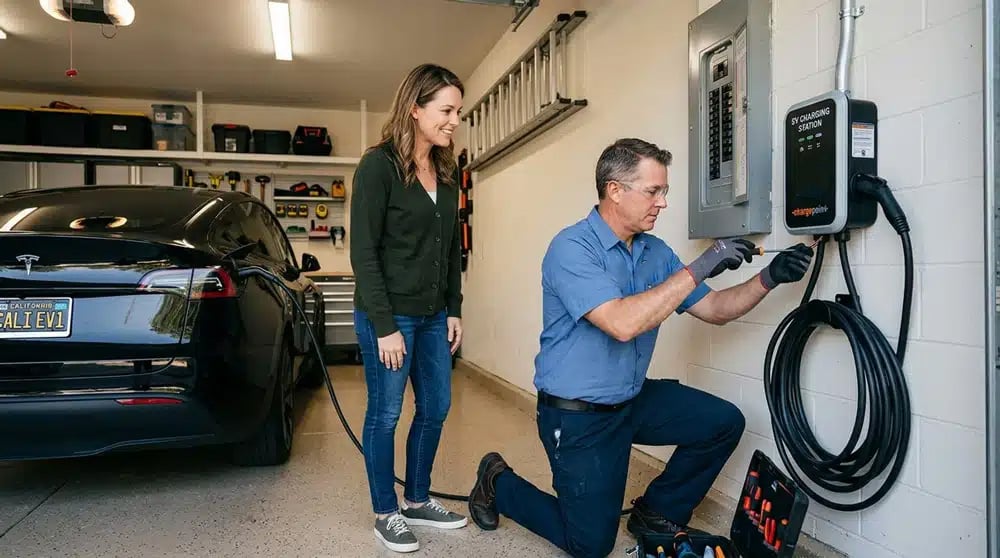
The charger is usually mounted on a wall near the vehicle parking area. Placement is chosen carefully so that the charging cable reaches the vehicle comfortably without stretching across walkways or creating tripping hazards.
Proper routing ensures the system remains safe for many years of daily use.
Key Safety Components Used in EV Charger Wiring
Professional EV charger installations include several safety devices designed to prevent electrical hazards. These components protect both the wiring and the homeowner.
Common safety features include:
- Dedicated circuit breaker
The EV charger should always run on its own circuit.
- Ground fault protection (GFCI)
This device shuts off power instantly if electrical leakage occurs.
- Proper grounding and bonding
Grounding directs excess electricity safely into the earth.
- Weather‑rated outlets or connectors
Required if the charger is installed near garage doors or outdoors.
- Disconnect switch
Some local codes require a nearby shutoff for emergency situations.
These safety layers are essential when determining how to safely run wiring for a garage EV charger in residential properties.
Grounding and Bonding: A Critical Safety Step
Grounding is one of the most important yet overlooked aspects of EV charger installations. Without proper grounding, electrical faults can energize metal surfaces, creating a serious shock hazard.
In a properly grounded system, excess electricity flows safely into the earth through grounding rods or the home’s grounding electrode system. This prevents dangerous voltage buildup during faults or lightning events.
Electricians verify that grounding connections inside the electrical panel are secure and that the grounding conductor for the EV charger circuit is properly connected. If the existing grounding system is outdated, upgrades may be required before installation continues.
This step protects both the charging equipment and anyone using it.
Common Mistakes Homeowners Make with EV Charger Wiring
Homeowners researching how to safely run wiring for a garage EV charger often underestimate the complexity involved. Several mistakes appear repeatedly in DIY installations.
Typical problems include:
- Using undersized wiring to save cost
- Connecting the charger to an existing dryer circuit
- Installing the charger too far from the electrical panel without adjusting wire gauge
- Ignoring local electrical codes
- Skipping proper grounding
Even small mistakes can create long‑term electrical risks. That is why professional electricians follow a strict process that ensures every component is rated correctly.
When You Should Hire a Licensed Electrician
Although some homeowners attempt DIY electrical work, EV charger installations involve high‑voltage circuits that must meet strict safety standards. For most households, hiring a licensed electrician is the safest approach.
A qualified electrician brings several advantages. They understand national and provincial electrical codes, perform accurate load calculations, and ensure that wiring is installed safely within walls or conduit.
They also test the system after installation, verifying voltage levels, grounding integrity, and breaker performance. These tests confirm that the charger operates safely before it is used for daily vehicle charging.
For homeowners planning a garage EV charger installation, professional assistance often prevents expensive corrections later.
Conclusion
Learning how to safely run wiring for a garage EV charger is essential for any homeowner planning to charge an electric vehicle at home. The process involves far more than connecting a charger to a wall outlet. Proper installation requires evaluating electrical panel capacity, calculating load demand, selecting the correct wire gauge, and installing dedicated circuit protection.
Electricians also ensure safe wiring routes, proper grounding, and full compliance with electrical codes. Each of these steps plays a role in preventing overheating, electrical faults, and long‑term safety risks.
By understanding what professionals check first, homeowners can make informed decisions about EV charger installations and ensure their charging setup remains safe, efficient, and reliable for years to come.