
A professional electrical inspection in Metro Vancouver typically costs between $150 and $500 , depending on the property, the reason for the inspection, and the level of reporting required.
A straightforward inspection in a newer condo may fall near the lower end of that range. An older detached home, a pre-purchase assessment, an insurance-related report, or a commercial inspection may require more time, testing, documentation, and follow-up recommendations.

The most important question is not simply, “What is the inspection fee?” It is: What does the inspection include, and what problem do you need it to solve?
At Trigger Electric, we provide electrical inspections for homeowners, buyers, landlords, property managers, and businesses across Metro Vancouver. Contact us for a clear quote based on your property and inspection requirements.
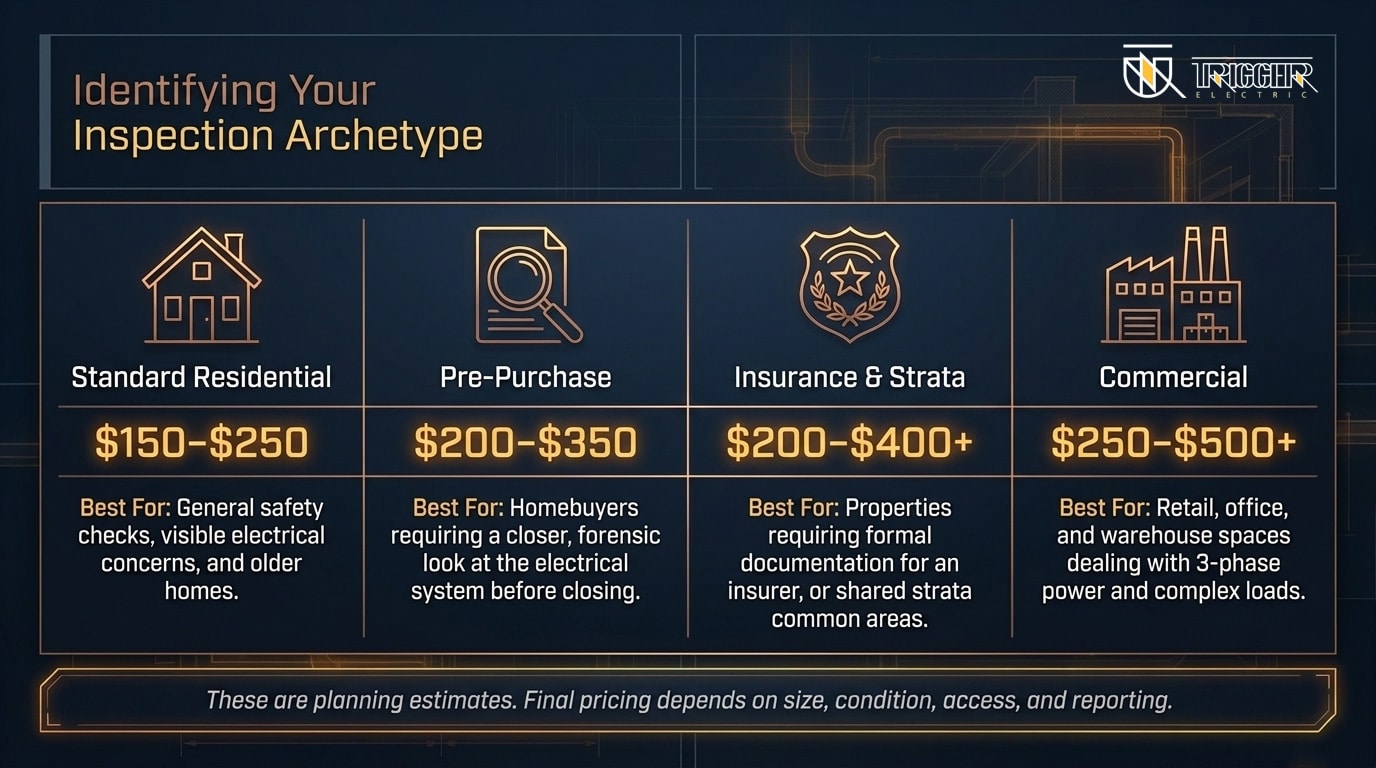
Electrical Inspection Cost at a Glance
| Type of Inspection | Typical Cost Range | Best For |
|---|---|---|
| Standard residential electrical inspection | $150–$250 | General safety checks, visible electrical concerns, older homes |
| Pre-purchase electrical inspection | $200–$350 | Homebuyers who want a closer look at the electrical system |
| Insurance-related electrical inspection | $200–$400+ | Homes that require documentation for an insurer |
| Strata or common-area inspection | $200–$400+ | Shared lighting, panels, parking areas, and common electrical systems |
| Commercial electrical inspection | $250–$500+ | Retail, office, warehouse, and other business properties |
These figures are planning estimates, not fixed quotes. The final price depends on the size of the property, the condition of the electrical system, accessibility, reporting requirements, and whether troubleshooting is needed.
What Affects the Cost of an Electrical Inspection?
1. Property Size and Electrical Complexity
A small condo with one electrical panel takes less time to inspect than a large home with multiple panels, a detached garage, outdoor circuits, a suite, or extensive renovations.
Commercial properties may also have three-phase power, specialized equipment, emergency lighting, subpanels, or more complicated load requirements. More components usually mean more inspection time.
2. Age of the Home
Older Metro Vancouver homes may contain wiring, panels, outlets, or past renovations that require closer review.
Properties with knob-and-tube wiring, aluminum wiring, fuse panels, ungrounded outlets, or visible DIY electrical work may require a more detailed assessment. The inspection fee may be higher because the electrician needs to review more areas and document findings carefully.
3. Why You Need the Inspection
Not every inspection has the same purpose.
A homeowner who wants a general safety check may need a different scope than a buyer, insurer, strata manager, or commercial property owner. For example, an insurance-related inspection may require a formal report with photos, findings, and recommendations.
Always tell the electrician why you need the inspection before requesting a quote.
4. Accessibility
Electricians can only assess components that are safely accessible during the appointment.
Blocked panels, locked utility rooms, inaccessible crawlspaces, finished walls, tenant-occupied suites, or equipment located in difficult areas can affect the scope and time required. An electrical inspection is generally non-destructive, meaning it does not involve opening walls unless additional work is approved.
5. Troubleshooting Requirements
An inspection identifies visible issues and potential concerns. Troubleshooting is different.
For example, if breakers trip repeatedly, lights flicker, outlets stop working, or a circuit appears overloaded, the electrician may need additional diagnostic time to locate the cause. That work may be quoted separately from the original inspection.
6. Permit, Repair, and Follow-Up Costs
The inspection fee does not usually include repair work, material costs, permit fees, or official regulatory inspections unless those items are clearly listed in the quote.
In British Columbia, electrical work that requires a permit follows separate regulatory requirements. Ask your electrician whether your project needs a permit and whether permit-related costs are included in the estimate.
What Is Included in a Professional Electrical Inspection?
The exact scope should be confirmed before the appointment. A typical residential electrical inspection may include a review of:
- Main electrical panel, breakers, and visible connections
- Accessible wiring, outlets, switches, and light fixtures
- Grounding and bonding where visible
- GFCI and AFCI protection where applicable
- Signs of overheating, corrosion, damaged wiring, or overloaded circuits
- Visible evidence of unpermitted or unsafe electrical modifications
- Electrical concerns related to renovations, aging systems, or insurance requirements
- A summary of findings and recommended next steps
For an insurance-focused inspection, ask whether the service includes a written report, photos, thermal imaging where appropriate, and documentation tailored to your insurer’s requirements.
Electrical Safety Inspection vs. Permit Inspection: What Is the Difference?
This distinction matters.
A private electrical inspection by a qualified electrician can help you understand the condition of your property’s electrical system, identify concerns, and plan repairs or upgrades.
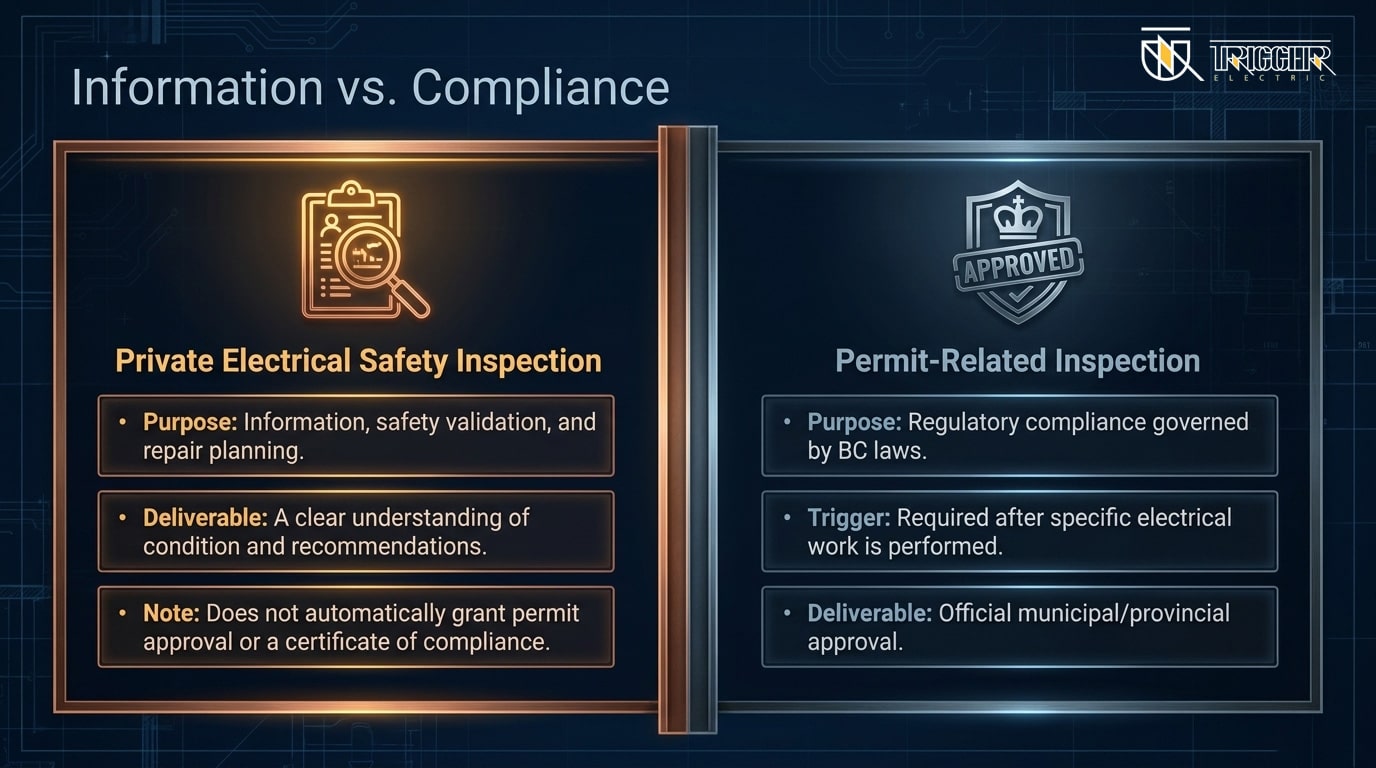
A permit-related inspection is different. It may be required after certain electrical work is performed and is connected to the applicable permit and regulatory process.
Do not assume that a general electrical inspection automatically provides permit approval, insurance approval, or a certificate of compliance. Ask exactly what documentation is included before booking.
When Is an Electrical Inspection Worth the Cost?
An electrical inspection is especially valuable in the following situations:
Before Buying an Older Home
A standard home inspection may identify broad concerns, but it may not provide the detailed electrical assessment needed to understand the condition of the panel, wiring, grounding, or safety devices.
If the home has an older electrical system, a suite, recent renovations, a fuse panel, or signs of DIY work, a dedicated electrical inspection can help you make a more informed decision.
When Your Insurer Requests Documentation
Some insurers may request an electrical report for older homes or properties with certain types of wiring or electrical equipment.
Book an inspection early rather than waiting until a policy deadline is close. You may need time to review findings, obtain repair estimates, and complete any recommended work.
Before a Major Renovation
Before adding a heat pump, EV charger installation, hot tub, basement suite, kitchen renovation, or large electrical load, it is smart to confirm whether your existing panel and service can support the upgrade.
When You Notice Electrical Warning Signs
Book an assessment if you experience frequent breaker trips, flickering lights, warm outlets or switches, burning smells, buzzing sounds, shocks from outlets, or repeated loss of power in part of the home.
Do not ignore urgent electrical concerns. If there is smoke, sparking, or an immediate safety risk, turn off power only if it is safe to do so and contact an emergency electrician.
Can an Electrical Inspection Find Every Problem?
No inspection can see inside every wall, ceiling, or concealed connection.
A professional inspection is designed to assess accessible components, identify visible defects, test relevant devices, and flag areas that may need further investigation. It can provide a strong understanding of the condition of your electrical system, but it is not a guarantee that every hidden issue will be discovered.
That is why clear reporting matters. A useful report should explain:
- What was inspected
- What could not be accessed
- Which issues need urgent attention
- Which upgrades are recommended
- Whether further troubleshooting is needed
- What repairs may require a separate quote or permit
How to Get an Accurate Electrical Inspection Quote
Before contacting an electrician, prepare the following information:
- Property type: condo, house, townhouse, strata, office, retail space, or warehouse
- Approximate property size and age
- Reason for the inspection: safety, insurance, purchase, renovation, or troubleshooting
- Known concerns, such as flickering lights or breaker trips
- Photos of the electrical panel, if available
- Whether you need a written report for an insurer, buyer, landlord, or property manager
Providing this information helps the electrician recommend the right inspection scope instead of giving a vague estimate.
Request an Electrical Inspection in Metro Vancouver
The cost of an electrical inspection is small compared with the cost of unexpected repairs, an insurance delay, or an electrical safety issue that goes unnoticed.
Trigger Electric provides electrical inspections for homes, condos, strata properties, and commercial spaces throughout Metro Vancouver. We will explain the inspection scope, clarify what is included, and provide practical recommendations based on your property’s condition.