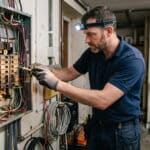
A new electrical panel can improve the condition and layout of your home’s electrical distribution, but the work sometimes reaches beyond the box on the wall. Incoming service equipment, grounding connections and individual circuits may need attention before the replacement can be completed properly.
For homeowners planning an electrical panel upgrade in Burnaby, the useful question is what the assessment actually found. Ask your electrician to separate necessary corrections from capacity improvements and optional future work. An older house does not automatically need complete rewiring, and a crowded panel does not automatically mean the incoming service is too small.
Panel replacement and service upgrades solve different problems
A panel replacement changes the equipment distributing electricity to your circuits. A service upgrade increases the capacity available to the property and may involve other equipment between the utility connection and the panel.
Installing a panel rated for 200 amps does not, by itself, give a house 200-amp service. The approved arrangement depends on the conductors, protection, meter equipment and utility connection serving it.
A subpanel adds distribution space; it does not create additional incoming capacity. This distinction matters when comparing estimates. One contractor may be pricing a replacement panel while another includes a service increase, meter base and new circuits. Those are different projects, even if both estimates say “panel upgrade.”
Start with the load assessment
Before choosing an amperage, list the equipment you expect to add: an EV charger, heat pump, induction range, electric water heater or secondary suite. Include model specifications where available. Planning everything together can prevent paying for another assessment or disruptive cable work later.
BC Hydro’s capacity guidance describes using a professional load calculation and, where applicable, twelve months of meter data to evaluate available capacity. The contractor must use a method accepted for your project and account for proposed loads.
Ask whether an approved load management arrangement could accommodate EV charging before committing to a larger service. Available capacity and spare breaker positions are separate questions. A panel can have empty spaces while the service has little remaining capacity, or lack spaces while the service has room for additional demand.
The meter base and service conductors may need attention
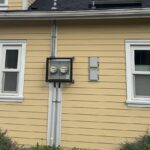
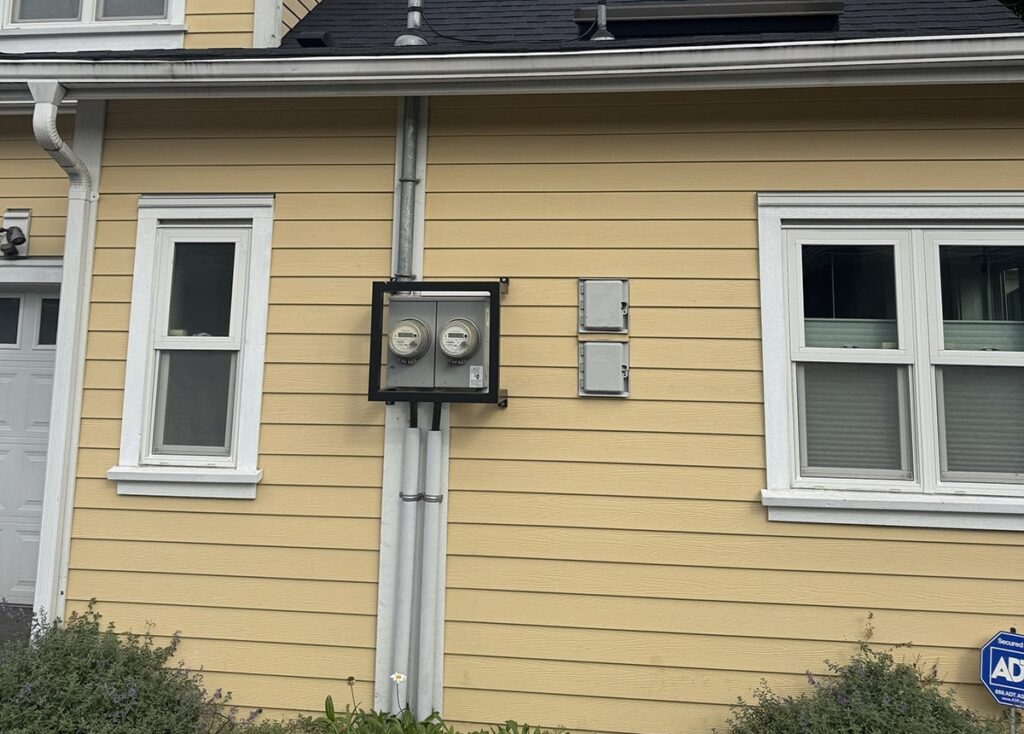
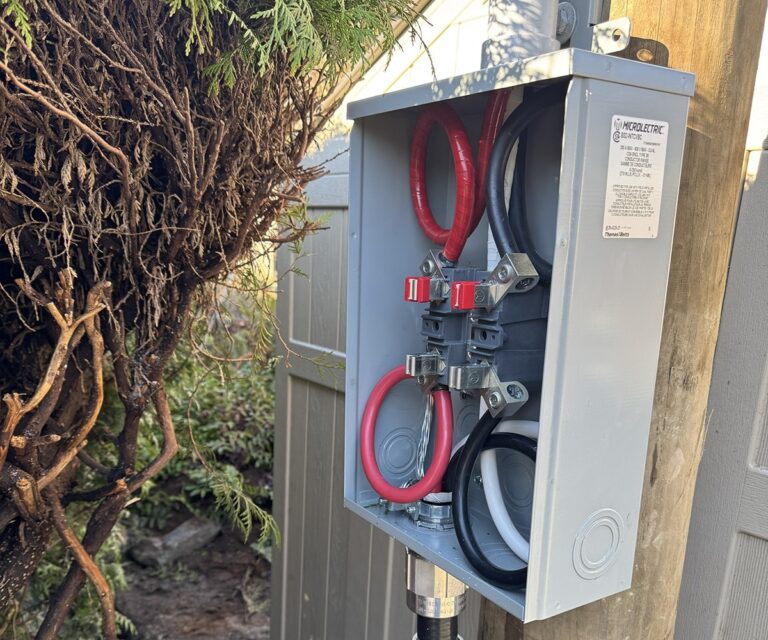
When capacity increases, the electrician must assess the equipment carrying that additional load. Depending on the installation, this can include the meter base, service conductors, main disconnect, overhead mast or underground raceway.
Condition matters even when capacity stays the same. Water entry, corrosion, damaged insulation or evidence of overheating can change the scope. Ask where the problem is, what caused it and whether the proposed work addresses that cause. Replacing a panel without resolving a water entry problem leaves the new equipment exposed to the same conditions.
For underground services, ask whether the existing route can accommodate the proposed work. Excavation, access and surface restoration can make two otherwise similar projects cost very different amounts. Confirm which utility-related charges and arrangements are included.
Grounding and bonding deserve a separate inspection
Grounding and bonding are related protective functions, but they are not interchangeable. Bonding connects appropriate metal parts into the fault protection arrangement. Grounding connects the electrical system to earth through the grounding arrangement.
Older houses may contain alterations that complicate that arrangement. A water service may have been changed to plastic, a bonding connection may be missing, or a garage subpanel may have been modified incorrectly.
A proper assessment checks the actual installation rather than assuming that a visible ground wire proves everything is correct. Ask the contractor to identify any required grounding or bonding corrections in the estimate. A new main panel also does not automatically add a protective bonding connection to every old outlet circuit.
Consider a house with a full panel, a planned EV charger and an occasionally tripping kitchen breaker. Those observations raise three separate questions: available breaker space, incoming service capacity and the condition or loading of the kitchen circuit. The answers might support a service upgrade, but they might also support a different combination of repairs and equipment.
Ask the electrician to explain each recommendation against the problem it solves. This makes phased budgeting more practical. Necessary safety corrections should be identified clearly, while optional provisions for a future renovation can be priced separately. You can then compare complete proposals rather than comparing the price of two different metal boxes alone.
If you are comparing electrical panel upgrade options in Burnaby or Vancouver, call Trigger Electric at +1(778)7194949 for more information. Describe your existing setup and planned equipment, and ask what an assessment should cover.
Existing wiring needs assessment rather than blanket replacement
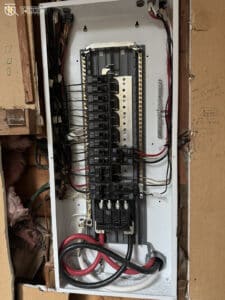
The wiring leaving the panel supplies lights, receptacles and appliances throughout the house. Replacing the panel does not replace those branch circuits or repair concealed defects elsewhere.
Technical Safety BC’s upgrading bulletin allows adequate existing branch circuits to be reconnected under specified conditions within its jurisdiction, while directing readers to municipal authorities for local requirements. Your contractor must establish what can remain for the Burnaby or Vancouver project.
Ask about damaged insulation, unsuitable connections, previous unpermitted alterations and circuits that no longer suit the loads they serve. With aluminum wiring, approved connections and compatible devices require particular attention. Technical Safety BC warns against using copper-only devices with aluminum conductors.
If knob and tube wiring is present, request a specific assessment and a defined replacement scope where necessary. The same applies to mixed wiring from successive renovations. “Old wiring” is too vague a reason for a large additional charge. An explanation should identify the condition, location and proposed correction.
Breaker protection and appliance circuits may change
New equipment and altered circuits may require different protection arrangements. Ask which circuits need ground-fault or arc-fault protection under the applicable requirements and why. These protections address different hazards; neither is a substitute for repairing faulty wiring.
Repeated tripping needs diagnosis. It may involve an appliance fault, damaged wiring or excessive load on one circuit rather than insufficient capacity for the entire house. Installing a larger breaker without confirming the circuit’s rating is not a remedy.
An EV charger or other substantial new load may also require a dedicated circuit. Include the cable route, installation location and equipment specifications in the assessment. Likewise, ask separately about surge protection if protecting electronics is a priority. Ordinary circuit breakers and surge protective devices perform different jobs.
Panel location and access can affect the work
An old panel may now sit behind cabinets, inside finished joinery or in a space whose use has changed. Ask the electrician to check the proposed equipment location and working access before ordering materials.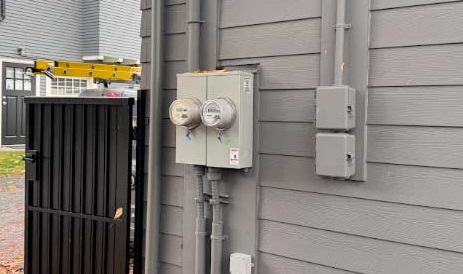
Moving a panel can introduce cable extensions, new routing and wall repairs. Have those consequences explained before approving relocation. Ask whether drywall opening, patching, painting and any assessment needed before disturbing older materials fall inside the electrical quote or require another contractor.
Avoid scheduling finished cabinetry or expensive wall finishes before the electrical layout is settled. Access that seems inconvenient during planning can become much more expensive after renovation work closes it off.
Permits and reconnection need local coordination
Burnaby and Vancouver administer electrical permits through their municipal processes. Burnaby’s residential trade permit guidance covers electrical installations, and Vancouver’s permit page sets out its requirements and application process. Your contractor should confirm the permit and inspection arrangements for your address.
Ask who obtains the permit, who coordinates any BC Hydro disconnection and reconnection, and what must happen before power can be restored. Installation time and the overall project timeline are not the same thing.
Plan for refrigeration, heating, internet and any equipment that cannot tolerate an interruption. Do not assume a promised installation date guarantees reconnection at a particular hour.
What a useful written estimate should explain
Request a scope that separates the panel itself from related corrections and future additions. Before accepting it, confirm:
- The proposed service capacity, panel specification and included circuits.
- Meter equipment, grounding, utility coordination, permits and inspection responsibilities.
- Exclusions, concealed-condition allowances and how additional work is approved.
Ask for findings to be documented where practical. Photographs, circuit identification and an explanation of the defect help you compare recommendations without choosing solely on price. At completion, retain the permit information, available inspection records and an accurate circuit directory.
Common homeowner questions
Does a panel upgrade mean rewiring the whole house?
Not automatically. The decision depends on circuit condition, suitability, alterations and local requirements. Ask which circuits can remain and which need corrections.
Will a 200-amp service fix breakers that keep tripping?
Not necessarily. A fault or overload on an individual circuit can persist after a service upgrade. Have the cause investigated before selecting the solution.
What should I prepare before booking an assessment?
Gather previous reports, describe recurring problems and list planned appliances. Include closed-cover panel photos and accessible meter-area photos taken safely from ground level. Leave internal inspection to the electrician.
Sources and publishing details
Primary guidance
BC Hydro: Understand your home’s electrical capacity
Technical Safety BC: Minimum Requirements for Upgrading of Electrical Systems in Single Dwellings
Technical Safety BC: Ask a safety officer how to prevent electrical fires
City of Burnaby: Residential Trade Permits
City of Vancouver: Get an electrical permit